
“Ultrasensitive detection of circulating tumor DNA or other low-abundance biomarkers in blood could transform cancer diagnostics, but the challenge is to develop cost-effective platforms that maintain high sensitivity without requiring expensive infrastructure.”
Commenting on advances in liquid biopsy
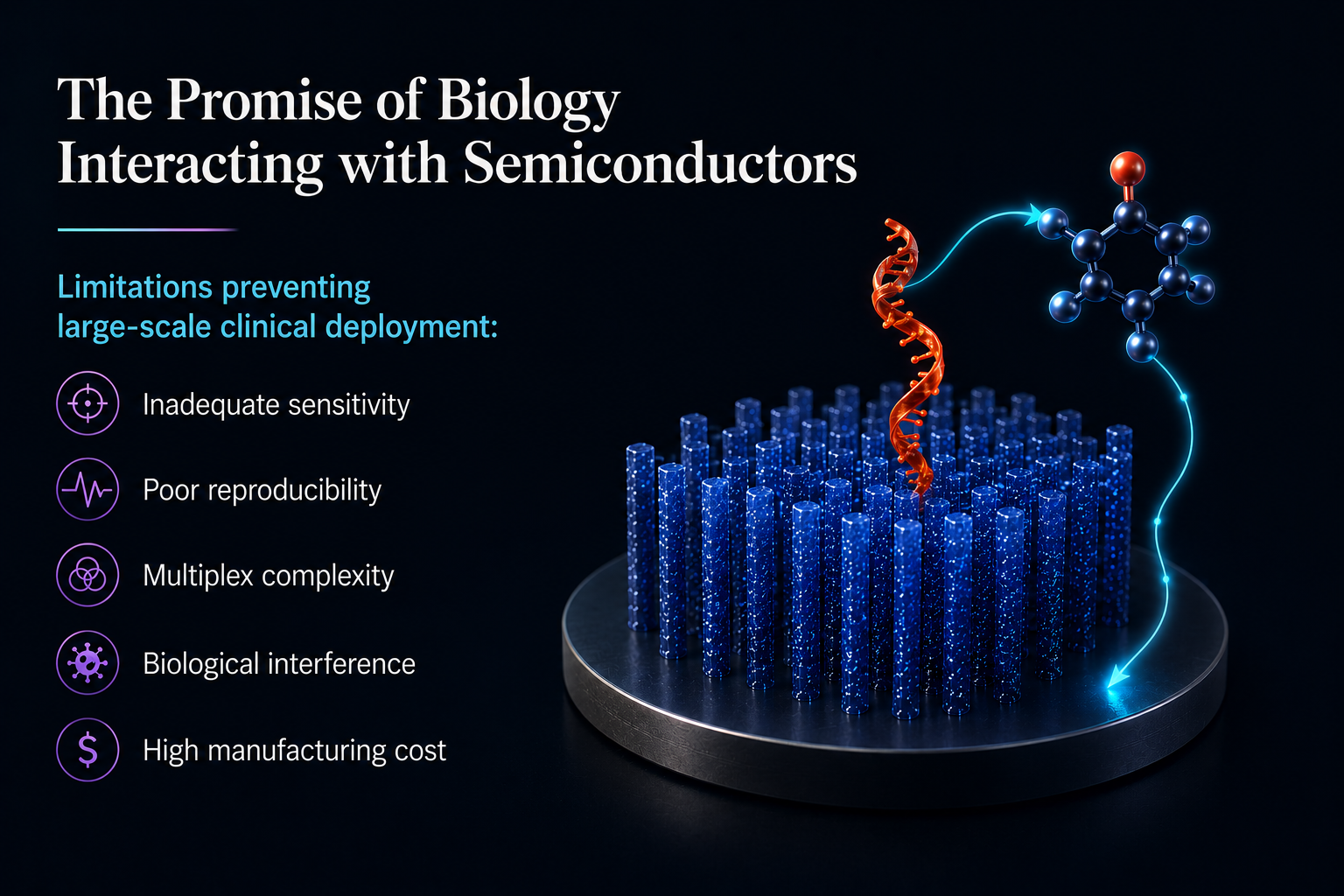
“The bottleneck for AI in precision health isn’t the algorithms—it’s the lack of affordable, multiplexed diagnostics that can detect low-concentration molecules like RNAs, proteins, and metabolites in a single assay. Until we solve this, precision medicine will remain a niche.”
The Lancet Digital Health
Technology Built Alongside Clinicians
Guanine was built to create the diagnostic infrastructure healthcare has been missing: a software-defined electrochemical biosensing architecture that can be configured across biology, applications, and workflows—without rebuilding instrument stacks.
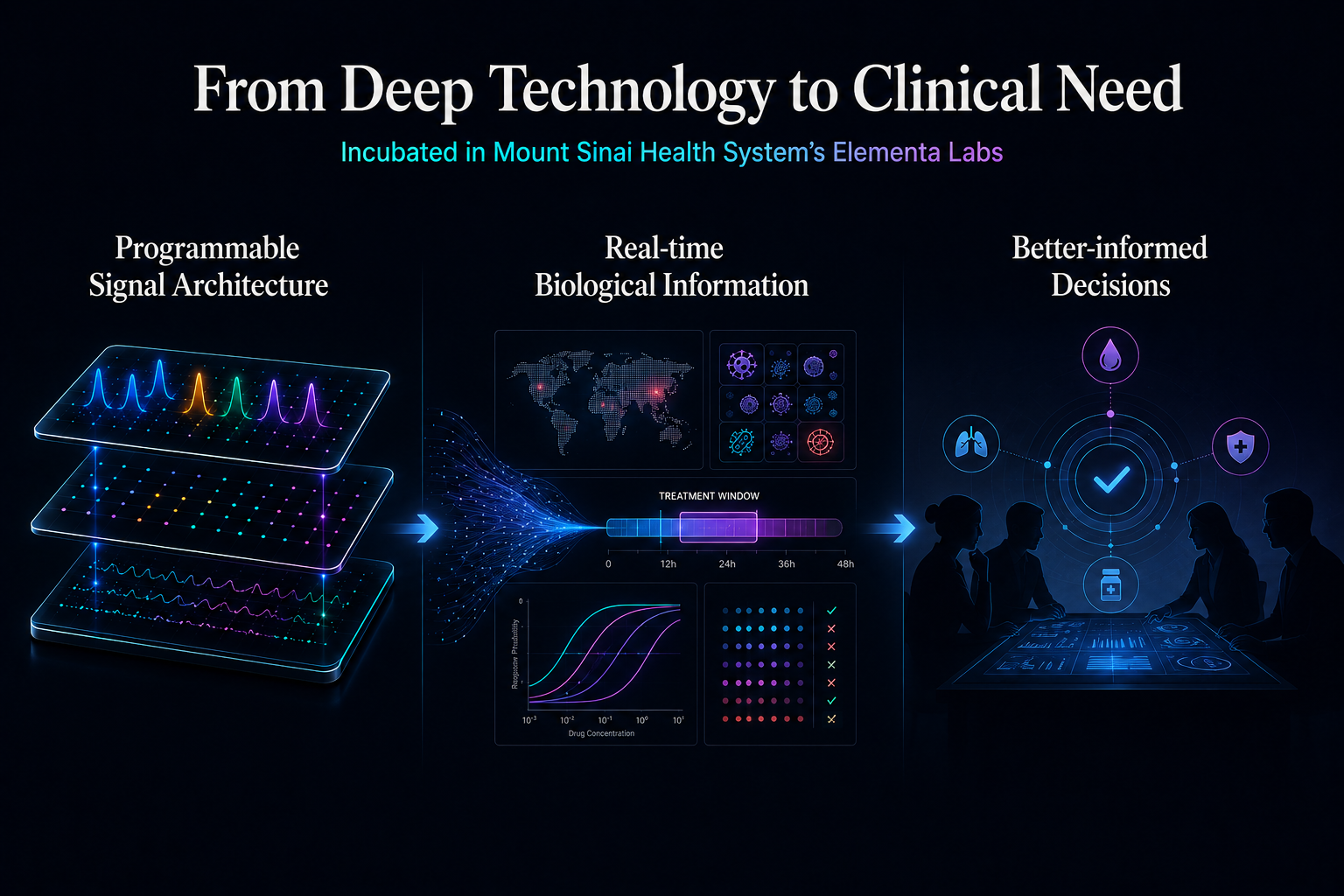
The company emerged from NASA-derived electrochemical sensing work and clinical incubation at Mount Sinai Health System, where close collaboration with clinicians helped shape the platform around real-world decisions—especially in time-critical settings like sepsis and infectious disease.
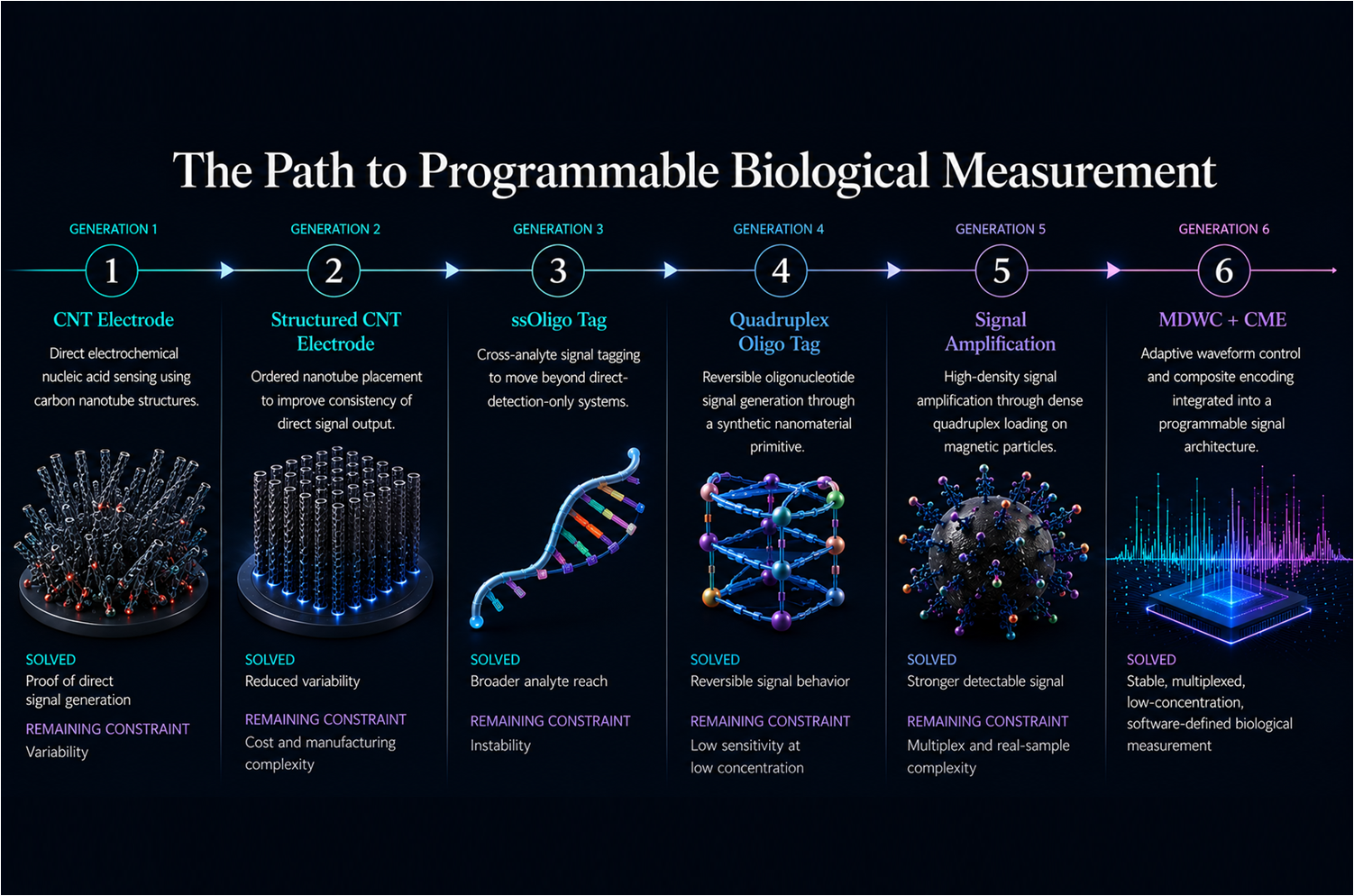
At the core is a molecular signal layer designed to make software-defined diagnostics possible: electroactive quadruplex tags that are stackable (supporting low-concentration detection), reversible (enabling repeated interrogation and advanced decoding), universal (compatible with many target types), and pre-conjugatable to magnetic particles (enabling rapid, simplified workflows in mobile settings).
This foundation supports scalable multiplexing and software-defined signal separation—turning electrochemistry into a programmable sensing layer rather than a niche modality.
Guanine was founded to build a platform that:
- Captures disease complexity in a single test
- Guides therapy earlier, with greater precision
- Scales globally at lower cost
- Enables OEMs to deploy proprietary assays on a stable architecture
- Unlocks precision health and AI-driven medicine through richer, quantitative data
Diagnostics re-engineered from first principles.
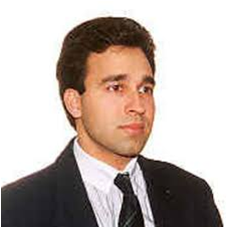
Neil Gordon
Neil Gordon is Guanine's President and founder, and the inventor of Guanine’s software-defined electrochemical biosensing architecture. He is an engineer and MBA whose work has focused on building and commercializing deep technologies at the intersection of nanotechnology, biology, and information systems—translating these capabilities into scalable diagnostic platforms.
He was among the earliest business consultants specializing in nanotechnology commercialization, with a long-standing focus on nano–bio–info convergence. His experience includes leadership in nano-innovation ecosystems, including work with Taiwan’s ITRI and early nanotech commercialization initiatives. He later founded a NASA-aligned spin-off in ultra-sensitive biosensing, gaining firsthand experience bridging frontier sensing science into deployable products.
At Guanine, Neil created multiple generations of the platform’s molecular and signal layers—integrating stackable, reversible electroactive quadruplex tags, magnetic particle workflows, and software-defined signal extraction and multiplex decoding. The result is a unified sensing architecture designed to measure across nucleic acids, proteins, metabolites, drugs, cells, and redox biology from a single platform.
Guanine’s clinical direction was shaped through close interface with Mount Sinai specialists across sepsis, infectious disease, emergency medicine, antimicrobial stewardship, microbiology, point-of-care testing, and biolab validation—ensuring the architecture maps to how clinicians make decisions under time pressure, not how instruments are traditionally built.
Neil’s work positions Guanine as an infrastructure company: a foundational sensing architecture engineered for institutional diligence, strategic partnerships, and long-term platform scale.
Raj Bawa
Raj Bawa, MD, PhD, serves as Vice President leading intellectual property strategy, regulatory positioning, and strategic business development.
Trained as a microbiologist, biochemist, and physician, Raj is a pioneer in clinical nanomedicine and recipient of the Lifetime Achievement Award from the American Society of Nanomedicine. He has authored more than 100 publications, edited 10 books, served at the U.S. Patent and Trademark Office as a registered patent agent, and advised global pharmaceutical organizations including Teva Pharmaceutical Industries.
At Guanine, Raj has guided IP architecture and claim strategy across multiple patents, served as Principal Investigator on the company’s CDC grant, supported regulatory pathway alignment, and strengthened institutional engagement and scientific visibility.
Raj will continue expanding Guanine’s strategic partnerships, supporting regulatory advancement, strengthening global IP defensibility, and driving business development as the platform scales into clinical and OEM markets.
Garry Palmateer
Garry Palmateer, MSc, serves as Vice President and Chief Microbiologist of Guanine Inc., leading biological assay strategy, pathogen panel development, and translational microbiology.
With more than 40 years of applied microbiology experience, Garry has led outbreak investigations, microbial source tracking, and regulatory laboratory accreditation initiatives across government, municipal, healthcare, and industrial settings. He served as Principal Investigator during the Walkerton E. coli outbreak and contributed to major public health investigations in Canada.
At Guanine and its predecessor NASA spin-off organization, Garry co-developed automated electrochemical biosensing systems for rapid pathogen detection, integrating ultrafiltration, immunomagnetic separation, and amplified molecular assays into deployable platforms. He leads assay validation and ensures alignment with regulatory and real-world microbiological standards.
As Guanine advances its sepsis, infectious disease, and multi-omic diagnostic platforms, Garry will continue guiding clinical assay expansion, differential diagnosis design, phenotyping validation, and regulatory-ready biological workflows to support institutional adoption.