
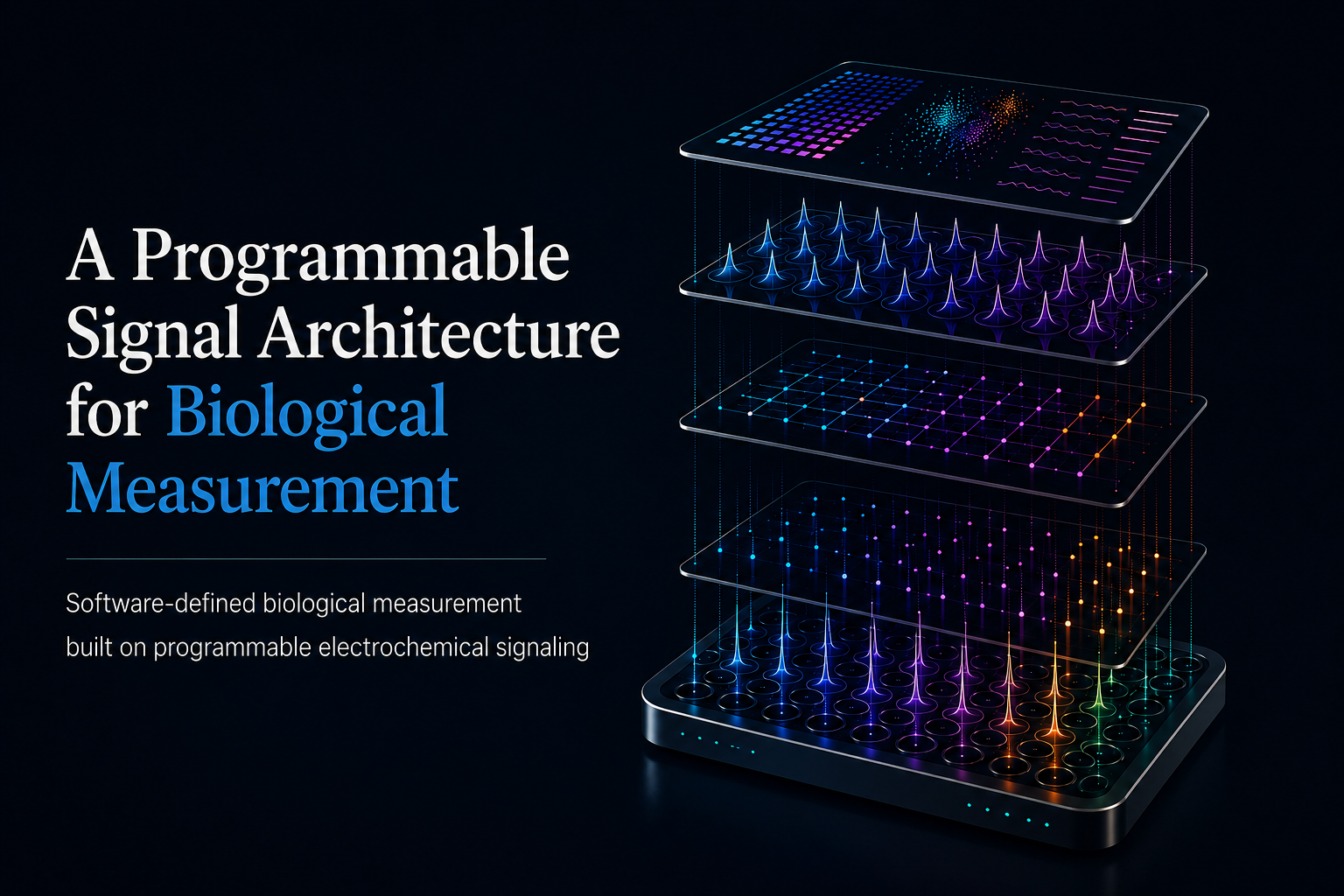
A Software-Defined Signal Architecture for Biological Measurement
Biological measurement did not evolve like computing, telecommunications, or imaging.
Instead of converging toward a universal programmable architecture, biological measurement fragmented into modality-specific systems—PCR, ELISA, sequencing, flow cytometry, culture—each constrained by fixed hardware, analog variability, and tradeoffs between multiplexing, sensitivity, cost, and deployability.
Guanine introduces a software-defined electrochemical signal architecture for biological measurement.
Biological information is encoded, amplified, stabilized, and computationally resolved within a shared electrical signal layer—enabling scalable multiplexing, low-abundance detection, and time-resolved biological measurement within compact, low-cost systems.
Transform Complex Biology into Precise, Scalable Insights
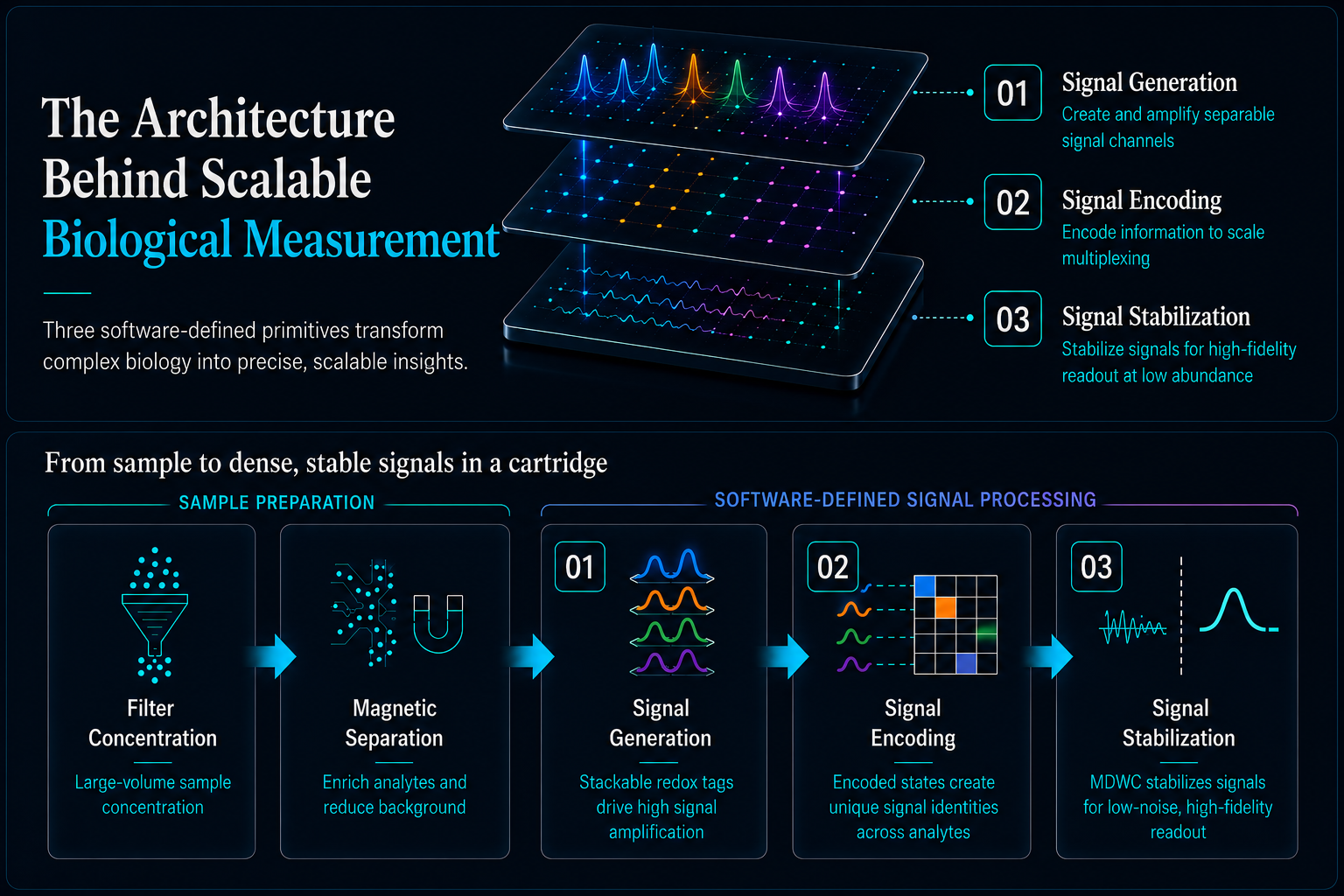
Guanine combines three software-defined signal primitives within a unified electrochemical measurement architecture that transforms complex biological samples into dense, stable, and computationally addressable signals.
01 — Signal Generation
Reversible electrochemical signal structures create amplified and separable signal channels within a shared electrical measurement space.
02 — Signal Encoding
Composite multiplex encoding computationally expands analyte identity space through orthogonal signal states rather than additional hardware channels.
03 — Signal Stabilization
Adaptive waveform control preserves signal fidelity and signal separability under drift, fouling, matrix interference, and low-abundance conditions.
Together, these primitives form a programmable signal layer capable of scaling multiplexing, sensitivity, and temporal resolution simultaneously within compact electrochemical systems.
From Sample to Dense, Stable Signals in a Cartridge
The Guanine architecture integrates sample preparation, analyte enrichment, signal generation, encoding, and stabilization within a continuous cartridge-based workflow.
Sample Preparation
Large-volume concentration and magnetic enrichment increase analyte recovery while reducing matrix-derived background noise and interference.
Software-Defined Signal Processing
Signal generation, signal encoding, and signal stabilization provide stable peak shape, amplitude, and separability across varying biological and environmental conditions.
This integrated architecture enables compact systems to perform advanced multi-analyte biological measurement previously constrained to large centralized laboratory platforms.
Quadruplex Electrochemical Signal Channels
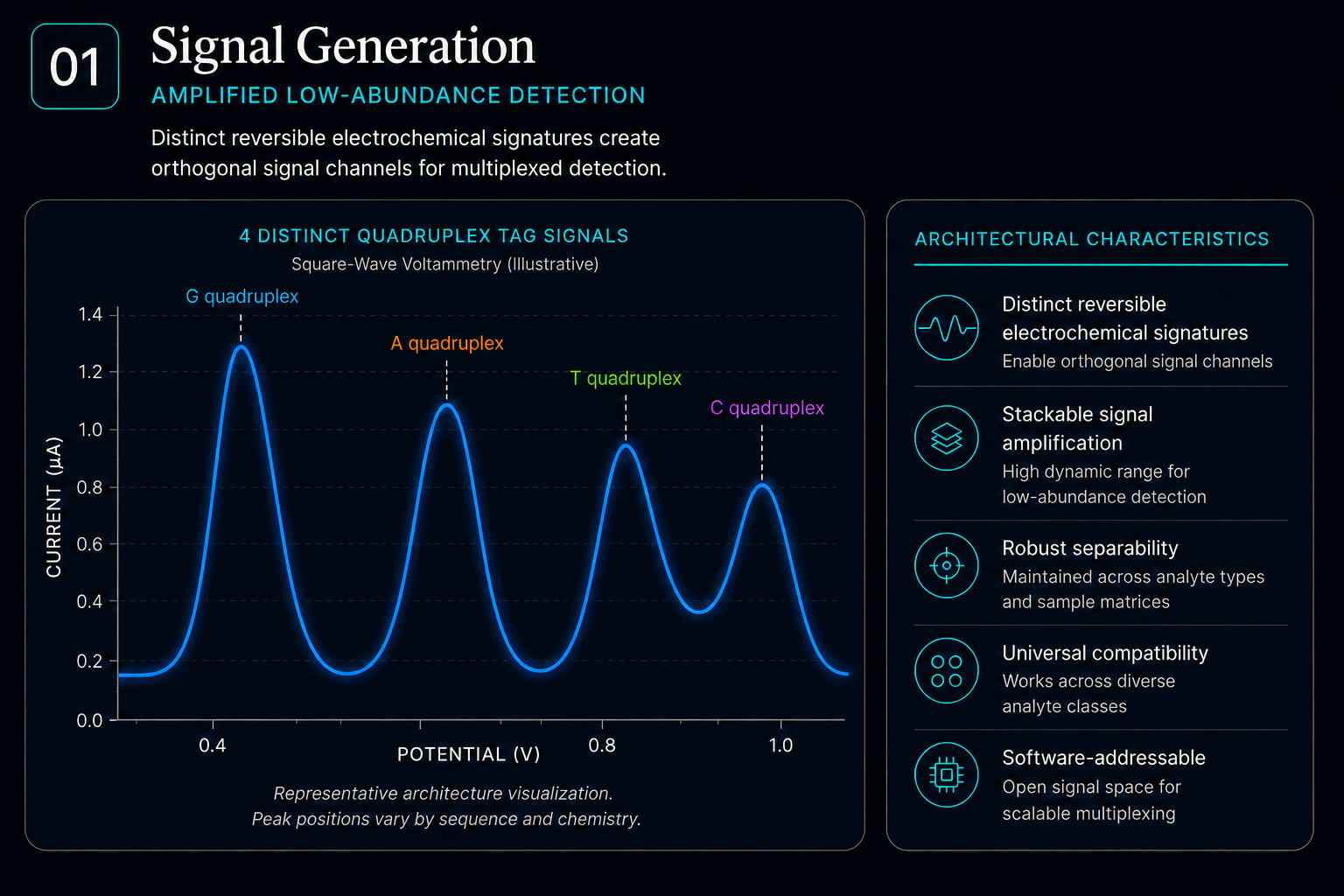
Signal generation creates the foundational electrical signal layer used throughout the architecture.
Unlike modality-specific optical systems, all analytes are measured within the same universal electrical signal framework.
Quadruplex tags comprising pre-fabricated oligonucleotides create distinct redox peaks with separable signals. Quadruplexes stack on a magnetic particle for high signal amplification.
Because signal amplification occurs directly at the electrochemical level, the architecture supports high signal density, low-abundance detection, multi-analyte compatibility, and scalable signal amplification.
Representative reversible electrochemical structures produce distinct current peaks at separable electrical potentials, enabling multiple signal channels to coexist within a shared electrochemical measurement space.
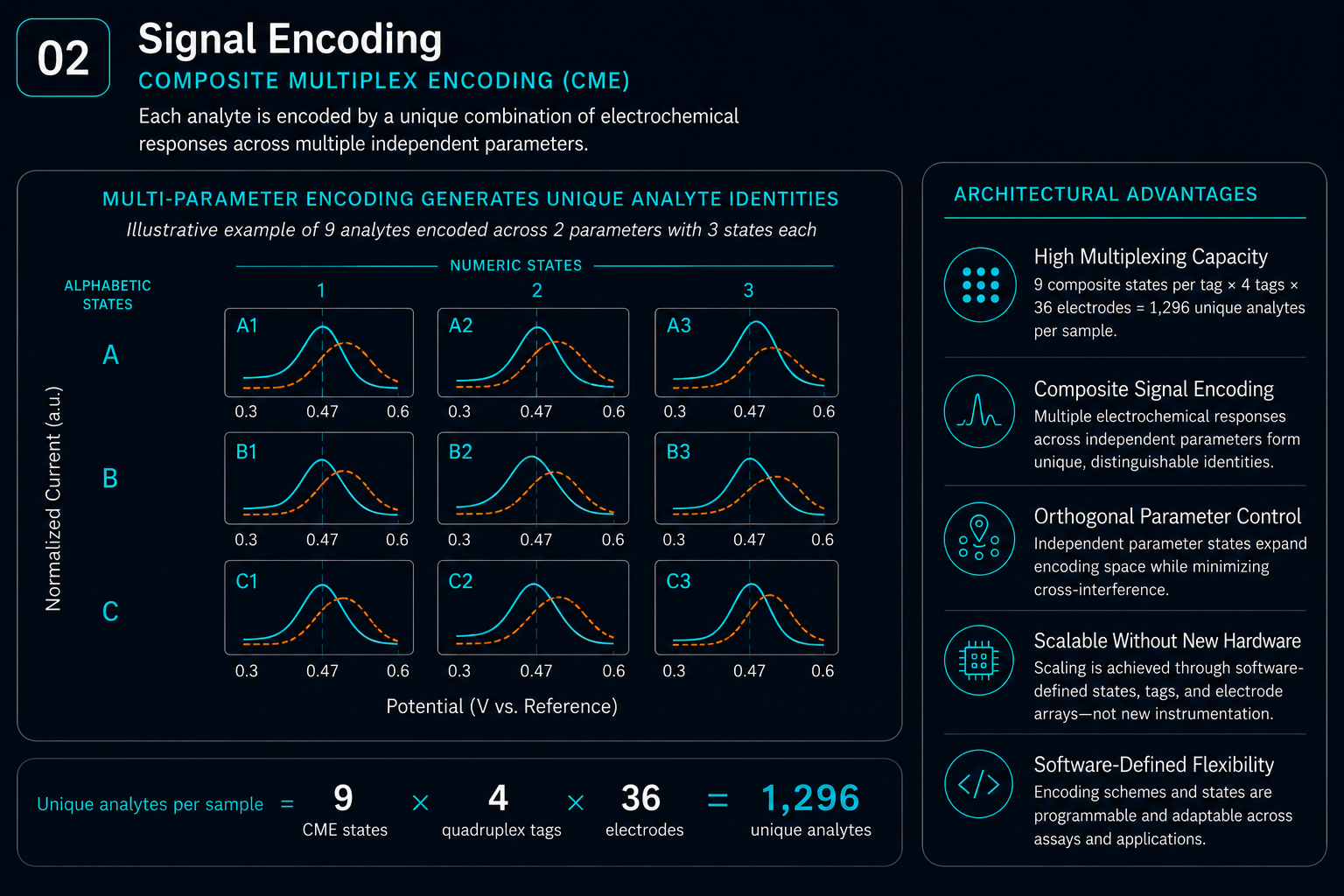
Composite Multiplex Encoding (CME)
Signal encoding expands multiplexing capacity computationally rather than through additional hardware channels.
Each analyte is assigned a unique composite signal identity generated across multiple orthogonal electrical response states.
Because encoding occurs within software-defined signal dimensions, multiplexing scales without proportional instrumentation growth, analytes coexist within the same signal space, hardware complexity remains low, and new signal identities can be generated computationally.
This creates a scalable address space for dense biological measurement within compact systems.
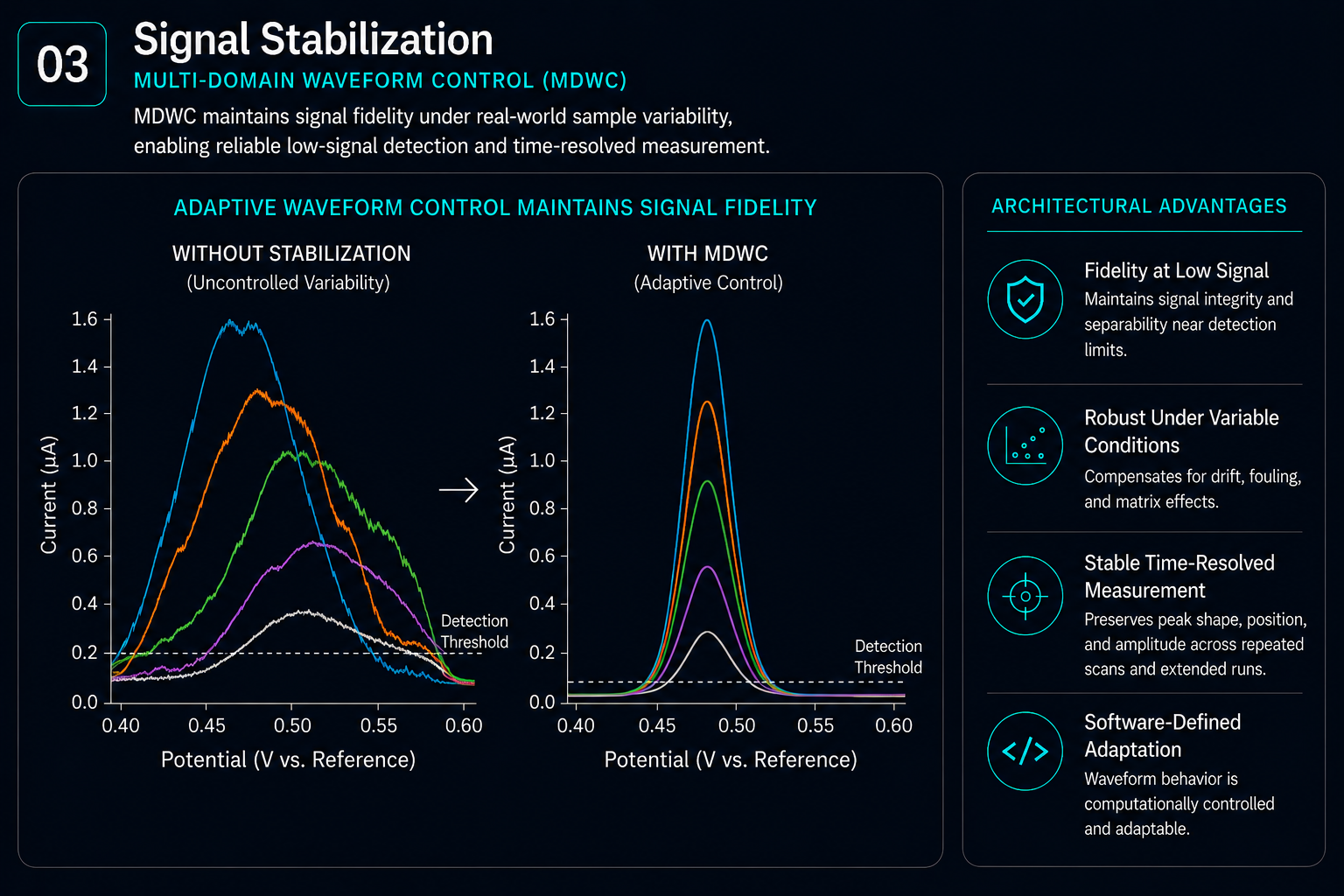
Multi-Domain Waveform Control (MDWC)
Low-concentration biological measurement is fundamentally limited by signal instability, drift, fouling, and matrix variability.
Multi-Domain Waveform Control continuously adapts waveform behavior to maintain stable electrochemical peak integrity across changing sample conditions.
MDWC enables improved low-abundance detection, stable peak separability, reduced drift and noise, extended measurement stability, and time-resolved biological monitoring.
By stabilizing electrochemical signals computationally, the architecture preserves fidelity even under challenging biological conditions.
Time-Resolved Biological Measurement
Because the architecture maintains stable electrochemical measurement over time, biological response can be monitored dynamically within the cartridge.
This enables culture-free phenotyping based on real-time biological behavior rather than endpoint growth detection.
Antibiotic susceptibility can be resolved through time-series response trajectories, enabling rapid susceptible/intermediate/resistant classification, real-time response monitoring, low-cost distributed phenotyping, and functional biological measurement without centralized culture workflows.
The same signal architecture used for multiplexing and sensitivity also enables temporal biological measurement.
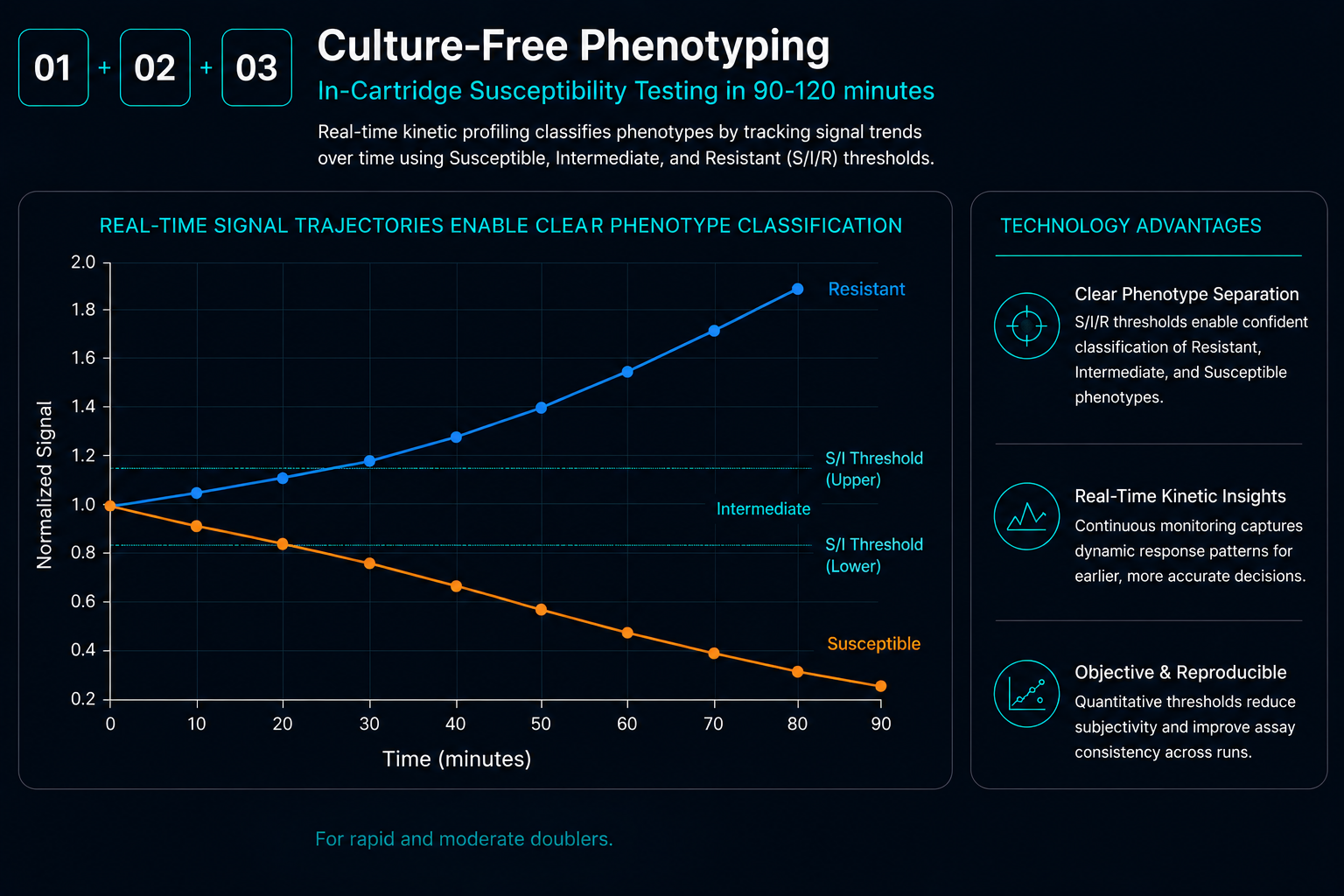
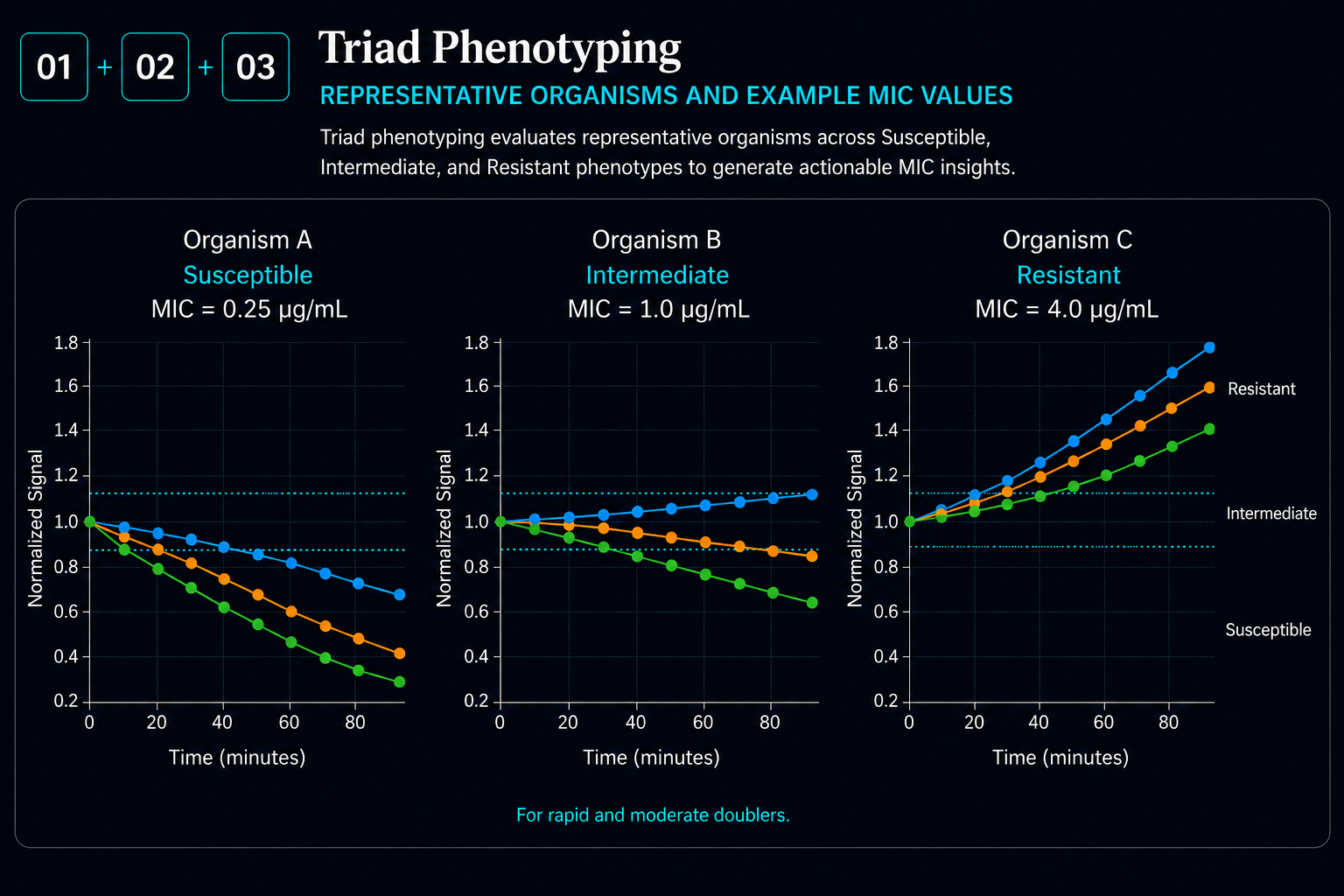
Dynamic Response Behavior Under Antibiotic Exposure
Traditional antimicrobial susceptibility testing depends on organism growth in centralized culture workflows that require days before actionable results are available.
Guanine’s triad phenotyping evaluates representative organisms across susceptible, intermediate, and resistant phenotypes in real time.
The triad model illustrates how normalized electrochemical response trajectories diverge over time across susceptibility classes, enabling rapid functional classification for rapid and moderate doublers in ~90–120 minutes.
Rather than relying on endpoint culture growth alone, the platform measures dynamic response behavior under antibiotic exposure to generate actionable MIC insights within the clinical decision window.
Software-Scalable Signal Density
Legacy biological systems increase multiplexing primarily through additional optics, additional channels, larger instruments, and higher hardware complexity.
The Guanine architecture scales multiplexing computationally within a shared electrical signal layer.
This shifts biological measurement from fixed-architecture scaling to programmable signal scaling.
As signal identities expand in software rather than instrumentation, measurement density increases without proportional increases in system cost.
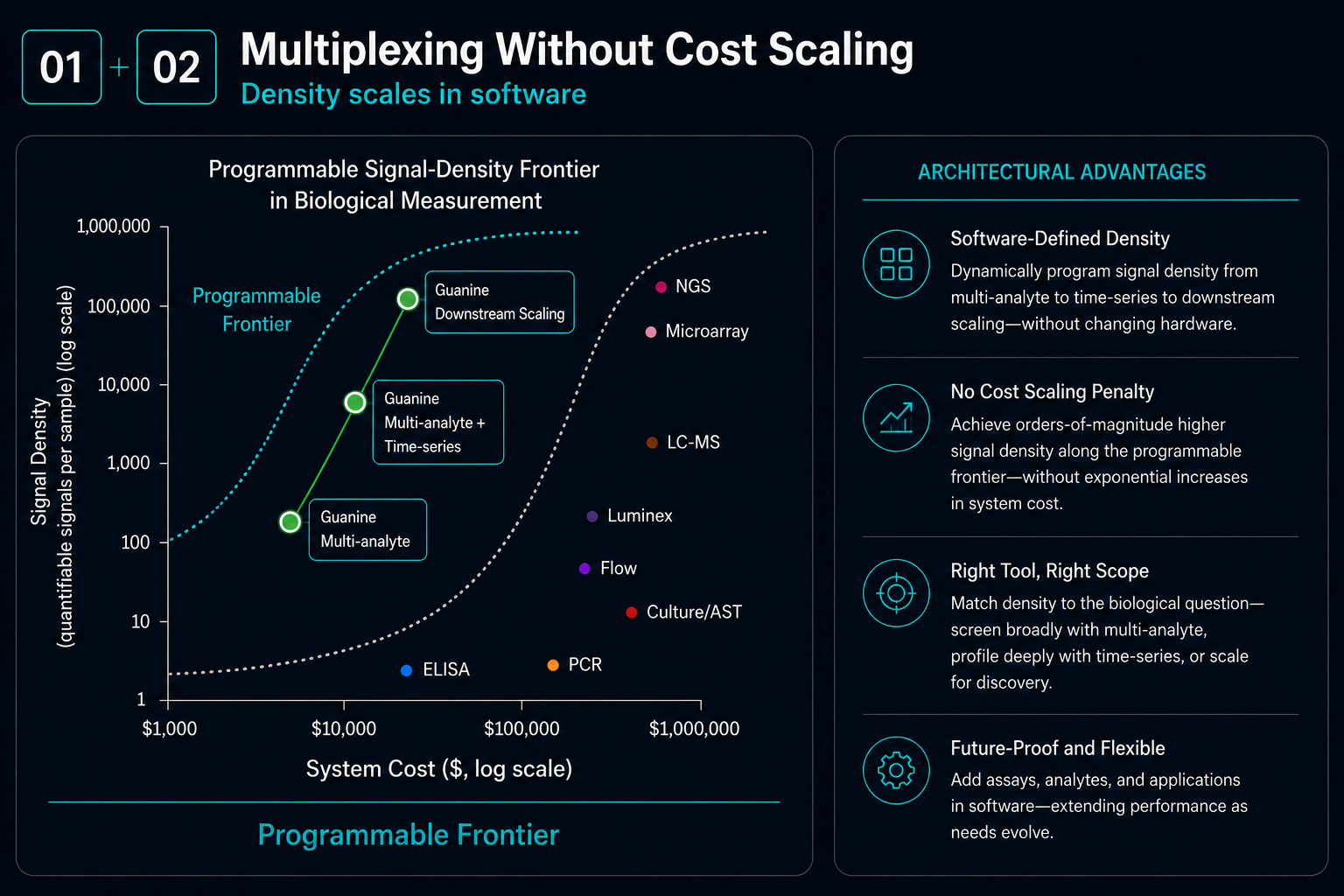
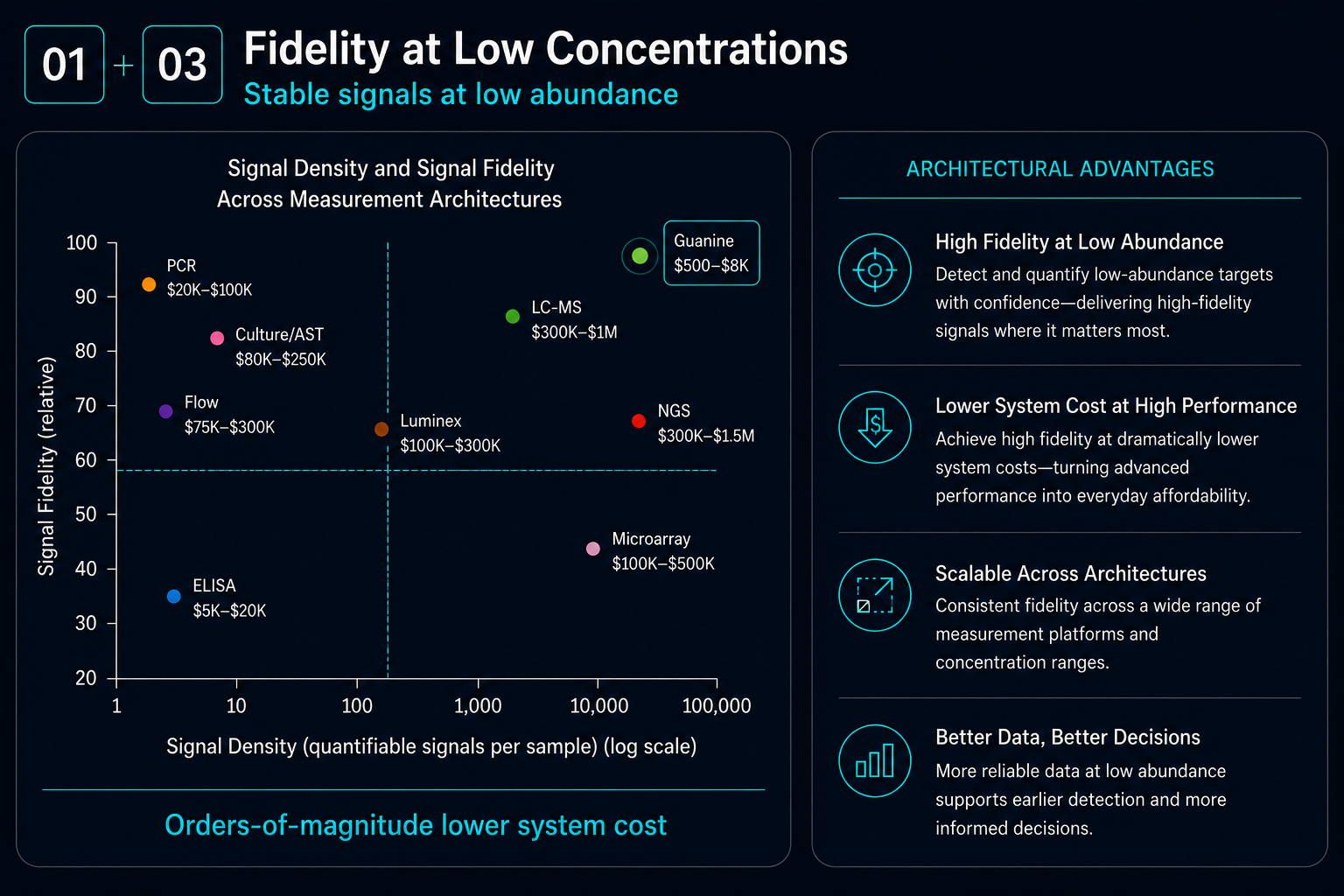
Stable Signals at Low Abundance
Most biological systems trade signal fidelity for multiplexing, cost reduction, or deployability.
The Guanine architecture combines high signal density, stable low-abundance measurement, compact instrumentation, and software-defined scalability within the same electrochemical framework.
This enables advanced biological measurement capabilities traditionally associated with large centralized systems to move into compact and distributed platforms.
A Scalable Measurement Platform
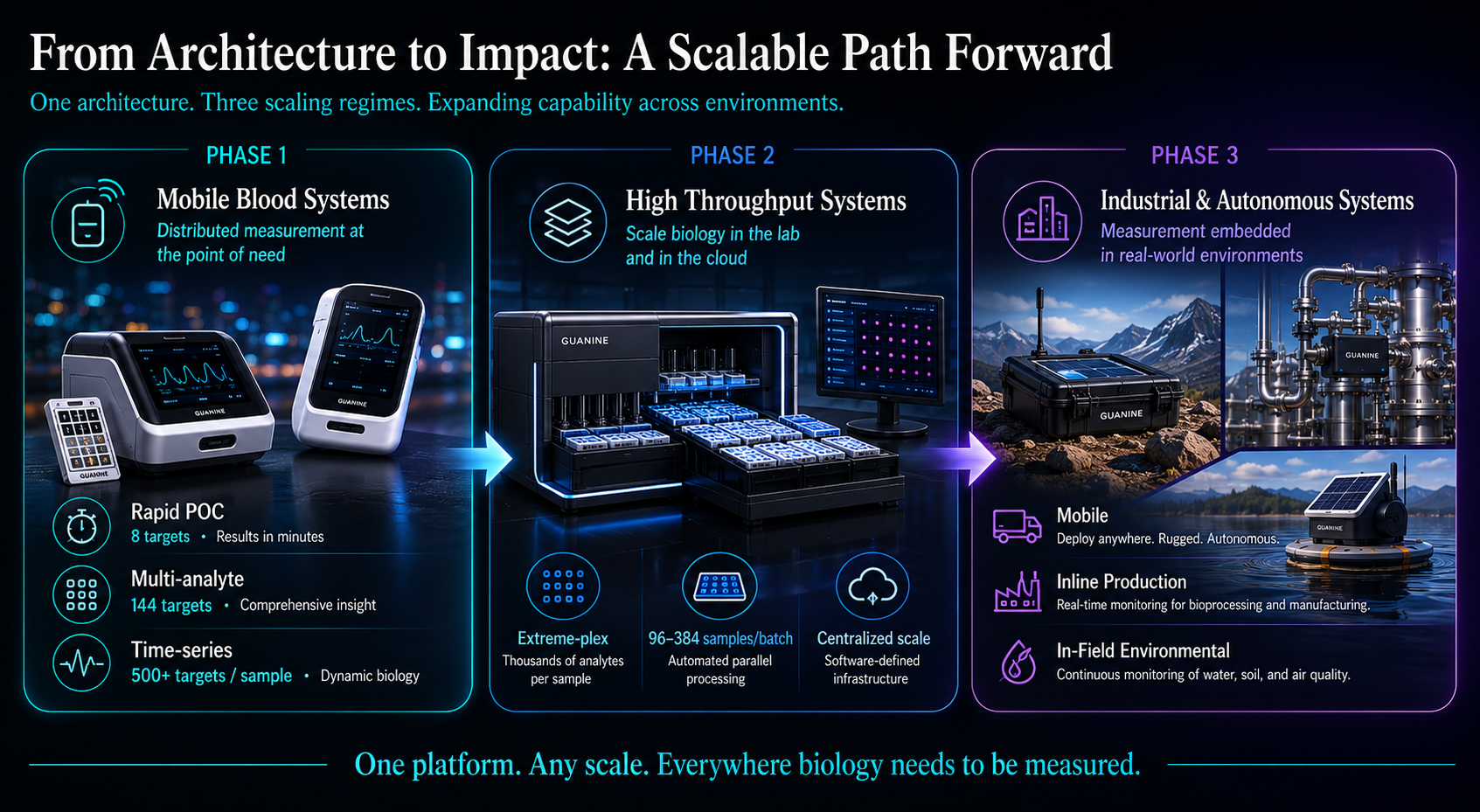
The same programmable signal architecture scales across multiple deployment classes.
Phase 1 — Mobile Blood Systems
Rapid point-of-care systems for multi-analyte and time-series biological measurement.
Phase 2 — High-Throughput Platforms
Extreme-plex centralized systems processing large sample volumes across 96–384 sample batches.
Phase 3 — Industrial & Autonomous Systems
Inline production monitoring, environmental sensing, and distributed autonomous measurement systems with continuous sampling workflows.
Because scaling occurs primarily within software-defined signal architectures, the platform can expand across markets without redesigning the underlying measurement core.
Defensibility Through Architecture
Guanine’s IP protects the architectural lock-in mechanism: the electroactive reversible quadruplex tag as a signal primitive, signal amplification, and the software-defined encoding and waveform control it enables.
The defensibility is not a single patent. It is the requirement that any competing system must replicate the full signal architecture—structures, methods, encoding, control, and workflow integration.
Patents
- US 11,175,285
- US 11,105,801
-
US 63/921,529
-
US 63/906,062
Biological Measurement Can Now Scale
Computing scaled when information became digitally programmable. Telecommunications scaled when information moved into universal signal architectures.
Biological measurement historically remained constrained by modality-specific hardware systems and analog biological variability.
The Guanine architecture introduces a programmable electrochemical signal layer capable of scaling multiplexing, sensitivity, and time-resolved measurement simultaneously.
As signal density, fidelity, and automation increasingly become computational problems rather than hardware problems, biological measurement begins to follow the same architectural scaling dynamics that transformed other information industries.